Loading...
-20%
Gum
Silk Cotton Tree Gum
Rs. 320Rs. 400-20%
In StockSKU: SIL-111
1
Product Details
- Local Names
- موچرس
- English Names
- Mochras, Bombax ceiba, موچرس
- Botanical Name
- Bombax ceiba
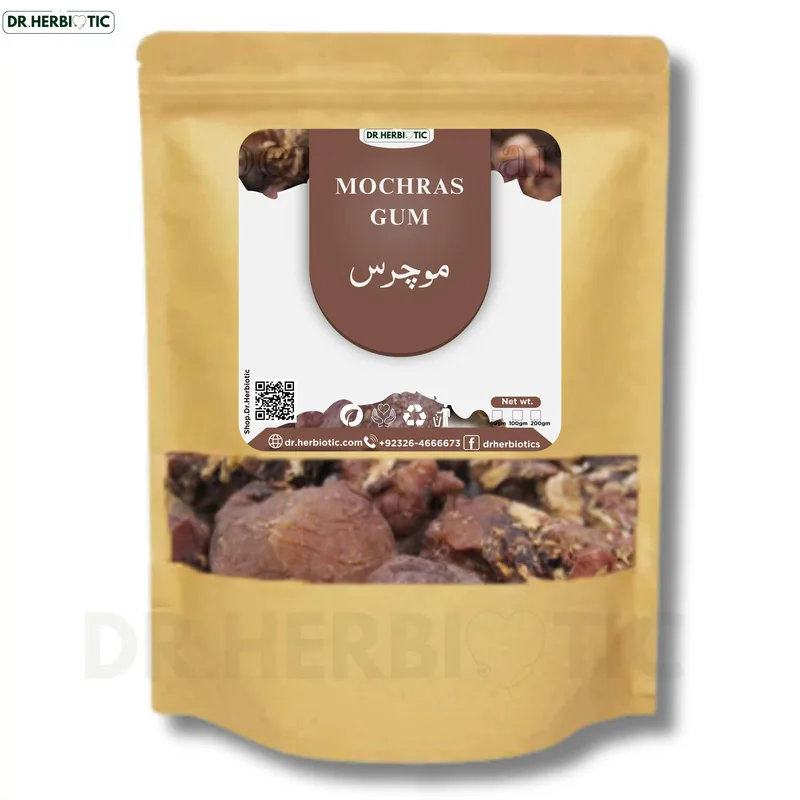
Mochras, the silk cotton gum, is the gum of Bombax ceiba, the great silk cotton tree, and it is one of those materials where the tree itself is the more famous thing. The tree is one of the largest in the forest, with a straight trunk that rises far above the others, and in the season it carries large red flowers, and the fruit that follows is a pod full of white fibre, the silky floss that gave the tree its name and that was once stuffed into the cushions and thequilts of the region.
The gum is the part that is used, and it is collected from the bark and from the young branches. It comes as pale, rounded, hard beads that are a good deal larger than a mustard seed, and it has a light, pleasant, slightly sweet smell, and the beads are hard and glassy until they are put in water, at which point they swell up into a soft, slippery, clear mass. That swelling is the whole character of the material, and it is why the gum is one of the mucilages of the classical practice, and why a small quantity does so much in a mixture.
In the traditional practice mochras appears in the classical combinations, and it is one of the materials that is well known in the household, where the swollen gum has been used for a very long time as a thickener and a binding agent, in the sweet shop and in the kitchen. It is also one of the materials that appears in the old household list for the things that are given to the children and to the convalescent, because of the way it goes down so easily and how gently it sits.
There is a good deal of interest in this tree beyond the herbal and the textile uses, and it is worth knowing a little about it. The silk cotton tree is one of the classic examples of a tree that earns its place several times over, with the floss, the gum, the bark, the leaves and the roots all being used, and it is one of the trees that the old forestry literature used to point at when it wanted an example of a plant that belongs to the village rather than to the forest department.
In the kitchen and the sweet shop, the practical thing is that the beads are soaked in warm water until they swell, and they are then used whole or beaten into the mixture. The soaking water is usually kept, because that is where a good part of the body of the preparation comes from.
Dr Herbiotic sells the clean gum beads, sorted and free of the bark fragments, in three sizes. Keep them sealed in a dry jar in a cool cupboard, away from the light and away from damp, because the gum is hygroscopic and it hardens again if it is allowed to dry in the open.
Reviews
No reviews yet — be the first!