Loading...
-2%
Gum
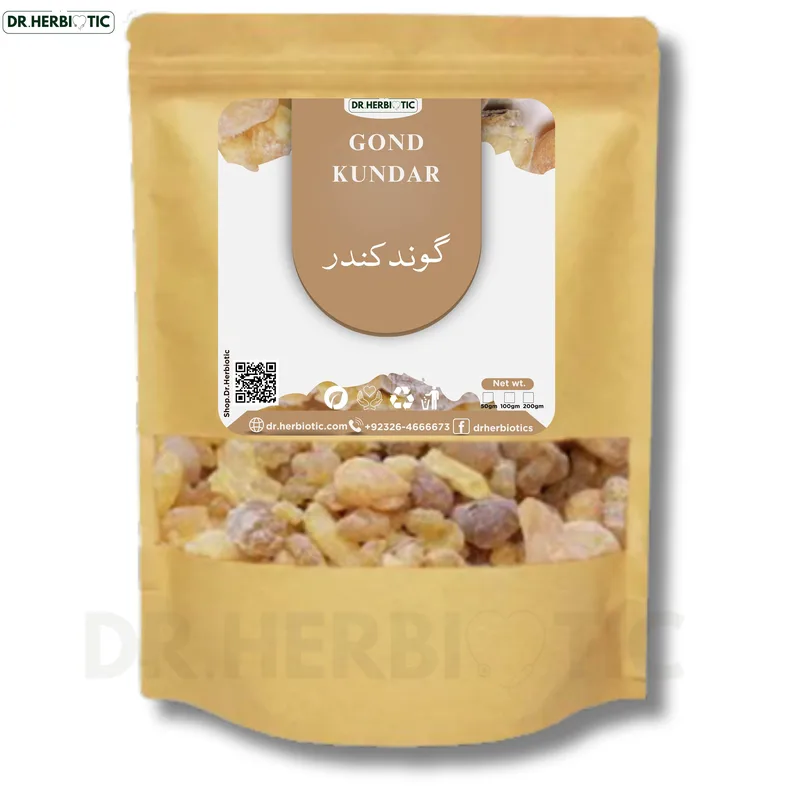
Frankincense Gum - Gond Kundar
Rs. 590Rs. 600-2%
In StockSKU: FRA-174
1
Product Details
- Local Names
- گوند کندر
Gond kundar, better known outside Pakistan as frankincense resin, is one of the most storied substances in the history of trade. The resin of Boswellia sacra and its relatives has moved along the incense routes for thousands of years, and the classical texts of Ayurveda, Unani and the Middle East all describe it as a resin that clears the air and lifts the mood of a room. The name frankincense comes from the old Frankish traders who carried it across the Mediterranean, while the Urdu name kundar points to its long home in South Asia.
The resin is tapped from the bark of a small, scraggly tree that survives on dry rocky slopes. When the bark is scored, pale milky droplets appear and harden into tear shaped beads, which are gathered and then sorted by size and colour. The best grade is the clear, pale amber tear with a bright, almost citrus top note that opens into a warm, resinous, slightly peppery heart and a soft woody base.
Kundar plays a central part in the household practice of this region. A piece is lit on a coal for the traditional fumigation of a room, and it is one of the core ingredients in the dhoop and agarbatti blends that are still sold in every herbal bazaar. Ground into a powder it is mixed with honey, and it is a familiar ingredient in the warming winter combinations that families prepare when the weather turns cold.
The material sold here is the natural gum resin, sorted into tear and chip grades so that you can choose the piece for a quick fumigation or the larger lumps for grinding. Because the scent is powerful, a small amount goes a very long way, and a 50 gram pack will last a household for months.
Store it the way the old apothecaries did: in a sealed jar, in a cool dark corner, well away from heat, moisture and sunlight. Handled that way, kundar keeps its perfume for years.
Kundar is one of those materials where the difference between average and good is obvious the moment you open the packet. The average grade smells dusty and flat, while good resin opens with a bright, almost lemony note before it settles into the warm, resinous heart that everybody recognises. That brightness comes from careful tapping and from the resin being gathered at the right time of year, and it is the reason Dr Herbiotic works with a small number of suppliers who can tell us exactly which harvest a lot came from. The tears are sorted by hand into clear pale pieces and darker chips, so you can choose the size that suits what you are doing. At home, treat the jar as you would treat a perfume: closed, cool, dark and away from the stove. Resin does not spoil, it only loses its top notes, and the difference between a well stored jar and a badly stored one is obvious the first time you open it.
Reviews
No reviews yet — be the first!