Loading...
-20%
Gum
Babool Gum
Rs. 320Rs. 400-20%
In StockSKU: BAB-133
1
Product Details
- Local Names
- گوند پھلائی
- English Names
- Babool Gum / Gond Phulai Boosts Digestion
- Botanical Name
- Acacia nilotica
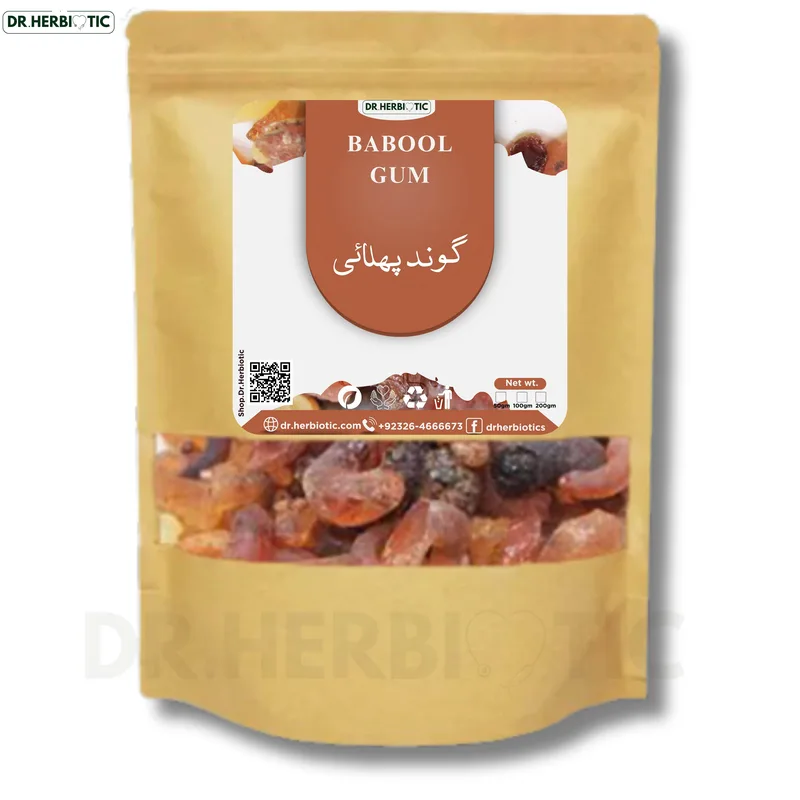
Babool gum comes from the Acacia nilotica tree, the same thorny tree whose pods are eaten as desi khejur in summer. In the villages of Sindh and Punjab the gum is collected by hand from the branches in the hot months, when the resin hardens into pale amber tears. Those tears are the product you receive here: irregular, glassy pieces with a soft honey scent that deepens the moment the packet is opened.
The gum has been part of South Asian kitchens for centuries, and not only as food. Ground into a fine powder it is used to thicken gravies, to bind kebab and halwa mixtures, and to give sugar syrups a slow, glossy body. The same resin is a fixture of the traditional herbal counter, where a small piece dissolved in warm water is taken as a soothing drink. Dr Herbiotic collects babool gum from trusted suppliers in Sindh and cleans it by hand so that no bark or dust is carried into your packet.
Because the gum swells many times its own size when it soaks, a pinch goes a long way. A 50 gram pack is enough for a household kitchen, while families who cook large qeema, haleem and dessert batches usually keep the 200 gram jar within reach. The resin keeps for a very long time in a cool, dry place, which makes it one of the easiest pantry items to store.
A word on quality: real babool gum has a slightly brittle, glass-like break and a mild resinous aroma. Cheap substitutes are often starch based and smell flat or powdery. We sell only the natural gum resin, sorted and cleaned, so that what you cook with is what traditional recipes were built around.
Sourcing and storage are the two things that decide whether a gum behaves well in the kitchen. Dr Herbiotic buys babool gum in small lots from collectors in Sindh who work through the hot months, when the resin comes away from the tree easily and the pods are already being picked for the khejur trade. The resin is then dried in the shade rather than in the sun, because sun dried gum turns brittle and loses its smoky edge. When the packet reaches you it should smell faintly of honey and wood, and it should break with a clean snap. Keep it away from the stove and out of direct sunlight, and take out only what you are going to cook with. Because it is a resin and not a flour, a tiny pinch is enough, and a well kept jar will still be giving you perfect results a year from now.
Reviews
No reviews yet — be the first!