Loading...
-3%
Gum
Mastic Gum Fine Quality
Rs. 2,475Rs. 2,550-3%
In StockSKU: MAS-269
1
Product Details
- Local Names
- مصطگی رومی/مستگی
- English Names
- MASTAGI ROOMI, BALM OF GILEAD, مصطگی رومی/مستگی
- Botanical Name
- Pistacia lentiscus
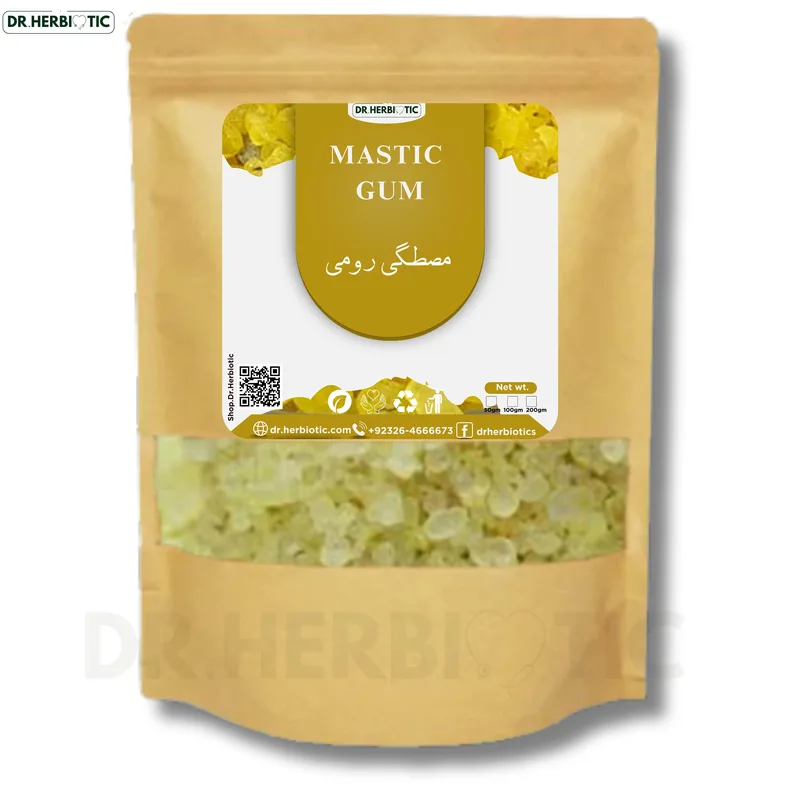
Mastic gum, called mastagi in Persian and guggulu-like in the older Arabic sources, is the resin of Pistacia lentiscus, the mastic tree that grows on the hillsides of the Greek islands, in southern Turkey and along the Levantine coast. When the bark of the tree is scored, a slow, clear resin bleeds out and hardens into rounded tears that are pale amber in colour and very hard indeed. The scent is the thing everyone remembers: pine and resin with a warm, slightly lemony brightness, and a taste that is aromatic, gently bitter and clean.
The name mastic comes from the Greek word for the action of chewing, because the resin was chewed for centuries to freshen the mouth and settle the stomach after a heavy meal. It was carried on the old trade routes as a luxury, and the chewing habit spread with it, which is why you will still find resin chews in Greece and in the Levant.
In the subcontinent the material is known as mastagi roomi, the Roman or imported variety, and it has a long place in Unani practice. A small piece is held in the mouth and chewed slowly, it is ground into the classic resin powders, and it is one of the ingredients in the warming winter combinations. It is also one of the rare gums that has a real culinary use beyond sweets, because a tiny amount of the powder works wonders in rice dishes, in kebab marinades and in the smoky gravies that need a lift rather than more heat.
This is the fine quality grade, which means larger, denser tears with a stronger and more even aroma than the smaller chipped material. Dr Herbiotic sorts the tears by size and clarity and packs them without powdering, so that the resin keeps its full scent until you break it yourself.
Keep the jar sealed, in a cool and dark place, and away from heat, which is the whole discipline with a resin this valuable. Break what you need with your fingers, chew it slowly, and the aroma will stay with you for a good while.
Mastic has a wonderful history with food that most people do not know. The resin was chewed with bread and olives at the tables of the eastern Mediterranean long before it reached Europe, and the custom of serving it with coffee in the Gulf and with tea in Iran is still very much alive. In those traditions the resin is offered after the meal as a digestive, and a small bowl of it in the room of an older house was a sign of a well run home. Dr Herbiotic buys mastic in small lots through traders who work with the Greek and Turkish collectors, and every lot is graded for size, clarity and aroma before it is bagged. Store the jar away from the spice rack, because resin next to strong spices takes on their scent and loses its own. Broken fresh every time, a single tear will carry a whole meal.
Reviews
No reviews yet — be the first!