Loading...
-27%
Herbs
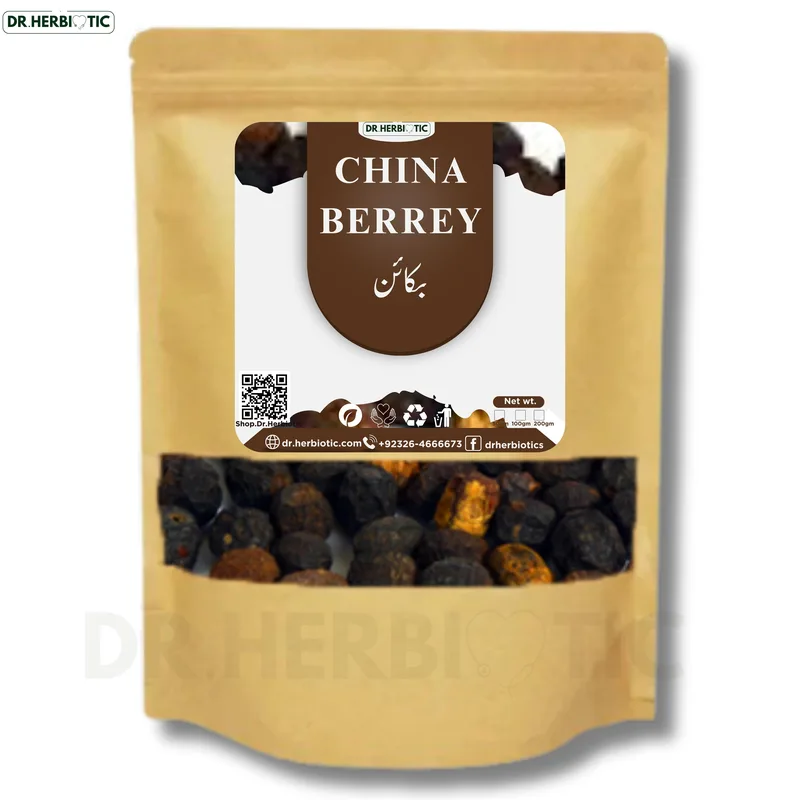
Chinaberry / Bakain treats Acne
Rs. 220Rs. 300-27%
In StockSKU: CHI-079
1
Product Details
- Local Names
- (بکائن)
Bakain, or chinaberry, is Melia azedarach, the small tree with the pale lilac flowers and the bunches of little yellow berries that line the streets of the subcontinent. It grows quickly, it is nearly impossible to stop once it is established, and it has a reputation that is mixed: the leaves and the berries are useful and well known, and the tree is also the subject of a great deal of caution.
The berries hang in dense clusters through the warm months, each one about the size of a small pea, green at first and then a warm yellow, and they are the part that is traded. The bark of the tree is also used, and the traditional practice deals with both. What matters for anyone buying it is that it is a material to be handled with respect and with guidance, not something to experiment with.
The leaves of the bakain are compound and finely cut, with a bright green colour and a strong, slightly bitter smell when they are crushed, and the dried leaf in the packet should still carry that smell. The berry is more delicate than the leaf and does not keep as long, which is why the leaf is the form most often found in the shops.
In the traditional practice the material appears in the classical combinations and in the household remedies of the region, where it has always been used in company with other herbs rather than on its own. It is one of those materials that a family knows by its local name, bakain or chinaberry, and asks for by that name, which is why Dr Herbiotic keeps it on the shelf with a clear label and a clear warning.
Dr Herbiotic sells the dried leaf, cleaned of the twigs and the dust, in three sizes. Keep it sealed in a dry jar, away from the light and out of reach of children, and follow the guidance of a qualified practitioner for any use beyond the traditional household combination.
The one piece of practical advice worth giving here is simple. Buy it in a small pack to begin with, use it the way the household remedy you trust uses it, and keep it clearly labelled and separate from the ordinary kitchen herbs.
The neem connection is worth mentioning here, because it explains the caution that surrounds this tree. Neem is one of the most generous plants of the subcontinent, giving leaf, bark, flower and seed, and it is also one of the plants that a family treats with a certain respect, because the seed in particular is powerful and is not something a child should handle. Dr Herbiotic keeps it in a clearly labelled jar on a shelf that a child does not reach, and the same care applies to the way it is used. If you have a grandmother or an aunt who used bakain, asking them how their family used it is the best way to learn the proper proportions and the right combinations, and it is a far better guide than any printed list. The material is worth keeping in the house, because a household that has it to hand is a household that can use it properly, which is exactly the point.
Reviews
No reviews yet — be the first!
You May Also Like
Herbs
Red arica | Red Betal Nuts (Chikni Supari) | سپاری تیلیا | Harmal | Hermal
Rs. 390Rs. 599
Herbs
Cumin White
Rs. 270Rs. 350
Herbs
Ephedraceae - Kalpa Joint Pine
Rs. 320Rs. 400
Herbs
Trehala Manna
Rs. 795Rs. 950
Herbs
Shikakai - Sikakai
Rs. 220Rs. 350
Herbs
Almonds Whole | Badam Gurbandi | Gurbandi Almonds | Whole Badam
Rs. 1,050Rs. 1,150