Loading...
-9%
Herbs
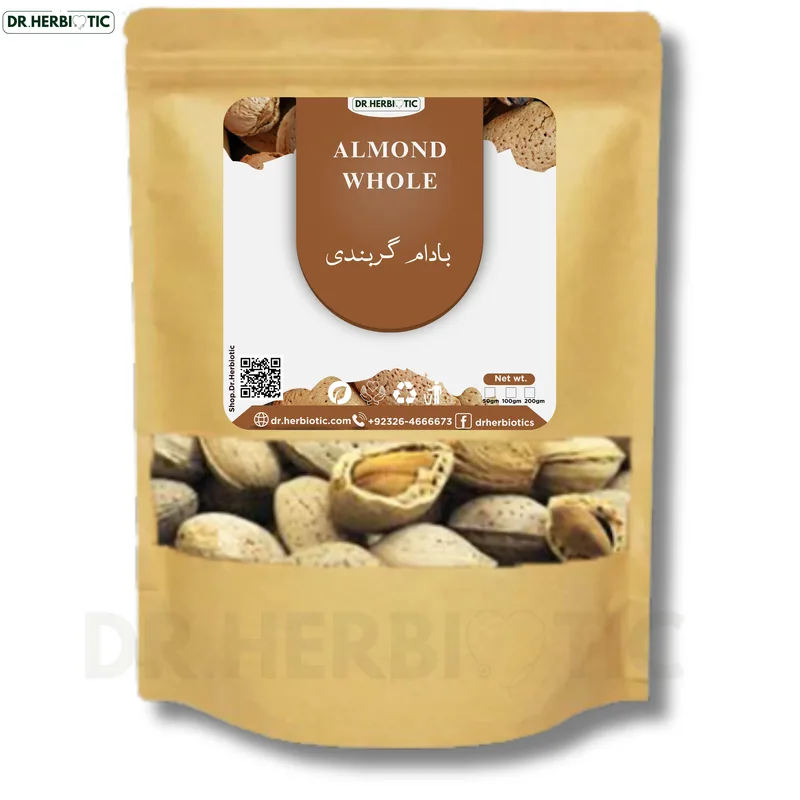
Almonds Whole | Badam Gurbandi | Gurbandi Almonds | Whole Badam
Rs. 1,050Rs. 1,150-9%
In StockSKU: ALM-233
1
Product Details
- Local Names
- بادام گربندی
- English Names
- Badam Gurbandi, Gurbandi Almonds, Whole Badam, بادام گربندی
This is the Gurbani almond, the second of the classic northern varieties and, for many families, the one that actually ends up in the halwa. Where the Abdul Wadi almond is small and pale, the Gurbani almond is larger, more rounded and deeper in colour, with a fuller, warmer flavour that holds up well against heavy sweetness.
The two varieties come from the same species, Prunus dulcis, but they are grown in different pockets of the north and selected differently. The Gurbani nut has a thicker shell and a hardier kernel, and in the traditional sweet shops it was the almond of choice for layered mithai, for barfi and for the ground almond paste that goes into some halwa. It is also the variety most often roasted and salted for snacking, because the bigger kernel takes the roasting well.
In the kitchen it behaves a little differently from the smaller almond, and knowing the difference is useful. Gurbani nuts hold their shape when chopped, so they are the ones to use when you want visible pieces of almond in a barfi or a kheer. When ground, they give a paste with a deeper colour and a fuller body, and they need a little more liquid to grind smoothly, so a spoon of milk or cream in the grinder makes the difference between a smooth paste and a gritty one.
Dr Herbiotic sells these whole and unblanched, sorted for size and uniformity, in a 500 gram pack and a one kilogram pack. The smaller pack suits everyday use and for the household that wants to try the variety first, while the kilogram is the sensible choice for anyone grinding a large batch of paste or running the sweet counter through a busy season.
As with any almond, storage decides how long it stays good. Keep the nuts sealed in a cool cupboard, or in the fridge if you have the space, and away from heat. They are a food with a long shelf life when they are treated with a little care, and the fragrance of a good Gurbani almond is worth keeping intact.
There is one more reason the Gurbani almond has kept its place in the sweet shop, and it is about yield. Because the kernel is larger and denser, a kilogram of it gives noticeably more ground paste for the same money, and in a halwa that means a fuller, richer body. The cost per kilogram of finished sweet is lower, and the flavour does not need as much sugar to balance it. For the home kitchen the same logic applies more simply: one good Gurbani nut cut into two gives you the visual lift that a smaller almond cannot, which is why it appears on the top of every barfi and every kheer in the country. Dr Herbiotic keeps this variety separate from the smaller almond rather than mixing them, because once they are mixed the customer can no longer choose, and the dish comes out different from the one the recipe intended.
Reviews
No reviews yet — be the first!