Loading...
-30%
Herbs
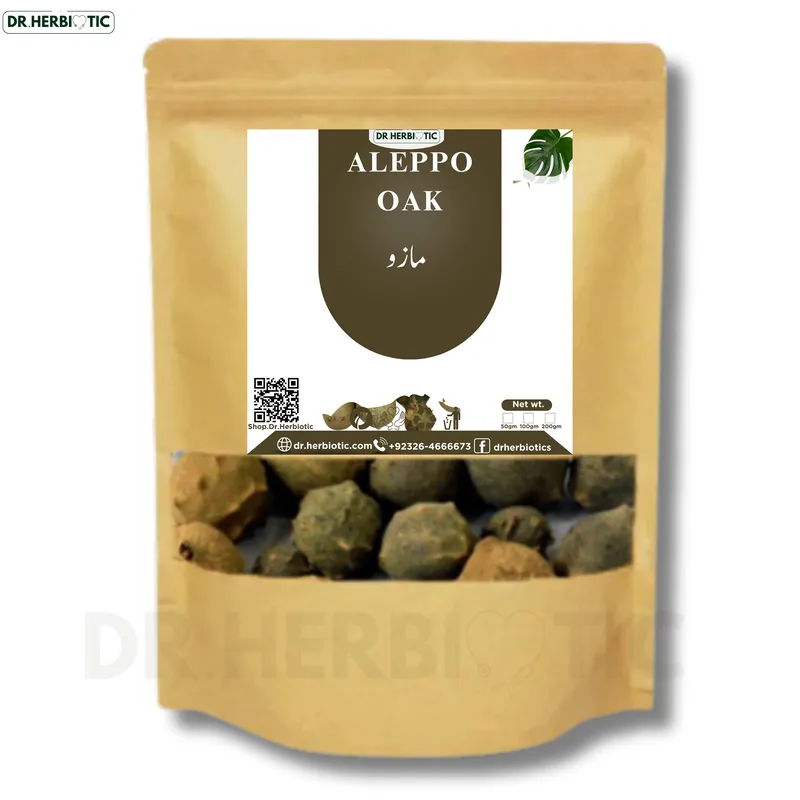
Aleppo Oak
Rs. 350Rs. 499-30%
In StockSKU: ALE-028
1
Product Details
- Local Names
- مازو
- English Names
- Mazoo
Mazoo, the Aleppo oak, is Quercus infectoria, the gall oak of the eastern Mediterranean, and it is one of the most distinctive materials in the herbal trade, because the part that is used is not the bark and not the leaf but the gall, the small growth that forms on the oak when it is attacked by a tiny wasp.
The gall is a hard, round, brown body, and when it is broken it reveals a dense, finely grained interior that is pale grey to brown, and that interior is the part the trade uses. The material has a strong, astringent, woody smell, and the old buyers judged it by the weight and by the darkness of the broken face. Aleppo oak galls were the standard source of the tannin that the old dyers used, and they travelled the same routes as the silk and the spices, which is why the material sits in the drawers of the subcontinent as readily as in those of Aleppo itself.
In the traditional practice mazoo appears in the classical combinations, and it is one of the stronger astringents of the materia medica. It is also one of the materials that the old households kept in a labelled jar, and it was one of the things that the old shopkeepers would measure out by weight rather than by the piece.
In the kitchen it is a specialist and a potent ingredient. A small piece is bruised and simmered to draw out its tannin, and the liquid is used where a deep, dark, sharply astringent note is wanted, and the traditional preparations of the old kitchens used it sparingly because it is very strong. It is also used in the old practice of the dyeing and the tanning of leather, and that is the oldest use of all.
There is a piece of botanical history here that is quite beautiful, because the gall is not the tree's own doing. It forms because a tiny wasp lays an egg in the growing tissue of the oak, and the tree grows the gall around it, and the gall is the house and the food of the larva. What the herbal trade has used for centuries is therefore a house that a tree built, and the old names for it in several languages carry that idea of the little insect and its house.
Dr Herbiotic sells the whole galls, sorted for size and weight, in three sizes. Keep them sealed in a dry jar in a cool cupboard, away from the light and away from any damp, because they are hard and dry and they keep almost indefinitely that way.
Reviews
No reviews yet — be the first!
You May Also Like
Herbs
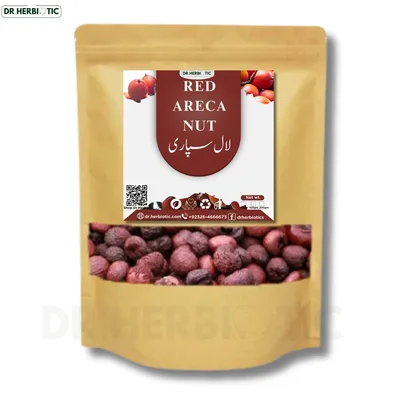
Red arica | Red Betal Nuts (Chikni Supari) | سپاری تیلیا | Harmal | Hermal
Rs. 390Rs. 599
Herbs
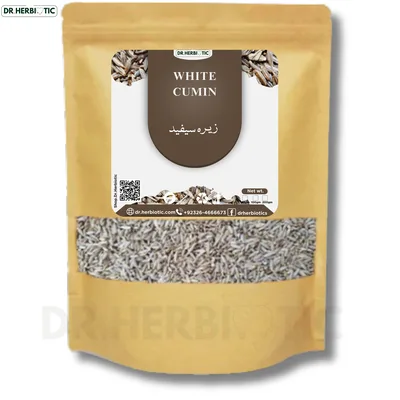
Cumin White
Rs. 270Rs. 350
Herbs
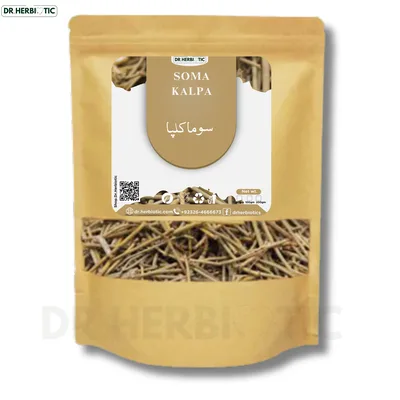
Ephedraceae - Kalpa Joint Pine
Rs. 320Rs. 400
Herbs
Trehala Manna
Rs. 795Rs. 950
Herbs
Shikakai - Sikakai
Rs. 220Rs. 350
Herbs
Almonds Whole | Badam Gurbandi | Gurbandi Almonds | Whole Badam
Rs. 1,050Rs. 1,150