Loading...
-16%
Seeds
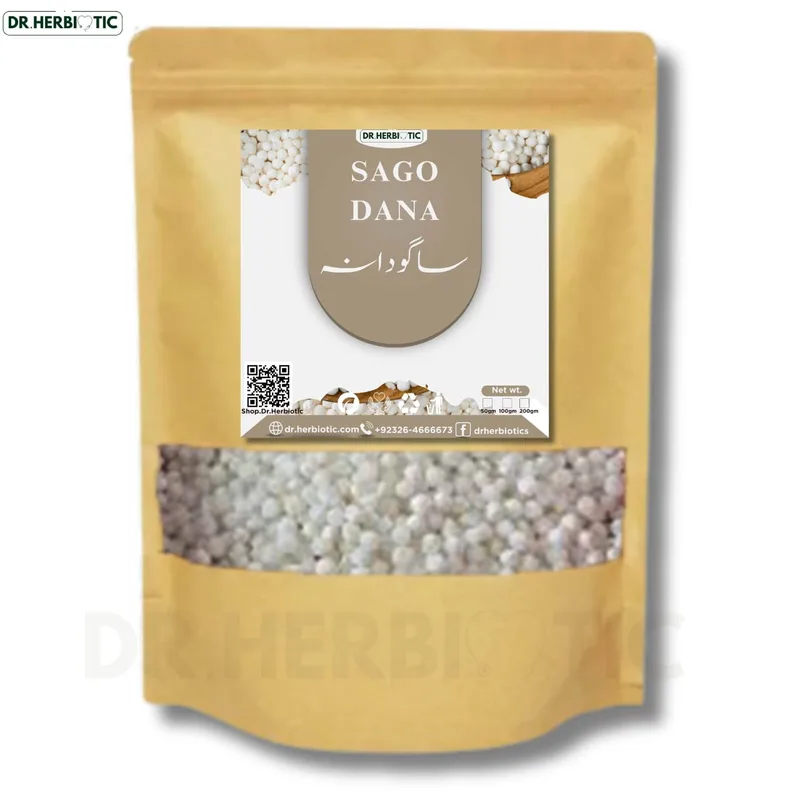
Sagu Dana
Rs. 800Rs. 950-16%
In StockSKU: SAG-012
1
Product Details
- Local Names
- ساگو دانہ
- English Names
- Saboo Dana, Sabudana, sago Dana
Sabudana, the sago seed, is the starch that the cassava root gives up when it is processed, and it is one of those materials that everybody knows by sight without knowing what it is. The small white pearls are not a seed at all, and the plant that gives them is not a plant that grows in the fields of the region, which is why the material has always come to the subcontinent by trade.
What arrives is a handful of tiny, round, off white pearls, about the size of a pinhead, and they are irregular rather than perfectly round, which is the mark of the genuine material. They are hard and they do not break when you press them, and when they are cooked they swell and turn translucent and glassy, which is the whole point of them.
In the traditional practice sago appears in the classical combinations, and it is one of those foods that has a very long double life, because it is a staple of the sweet shop and of the kitchen and it is also one of the familiar materials of the household remedy tradition. In the old households the sabudana was soaked and boiled and eaten on the days of fasting, when a light and cooling food was wanted, and it is one of the foods that every household of the region knows by name.
In the kitchen it is one of the most useful of the cheap materials. It is soaked for a few hours and then boiled, and it goes into the kheer and the khichra and the halwa and the fruit preparations, and it is the base of the sabudana kheer of the old sweet shops, where it is cooked slowly in milk with the sugar and the cardamom until it turns clear and glossy.
There is a good deal of interest in the material itself, and it is worth knowing where it comes from. The cassava is a tropical root that was carried to the subcontinent with the Portuguese and then became a staple of the southern kitchen, and the starch from it is the sago of the trade, and the old way of making it was to grind the root, to press the juice and to let the starch settle, and the settled starch was rubbed into small pearls and dried.
Dr Herbiotic sells the sago in three sizes. Keep it sealed in a dry jar in a cool cupboard, away from any damp, because the pearls will pick up moisture and go sticky and will not cook properly if they have.
Reviews
No reviews yet — be the first!