Loading...
-27%
Seeds
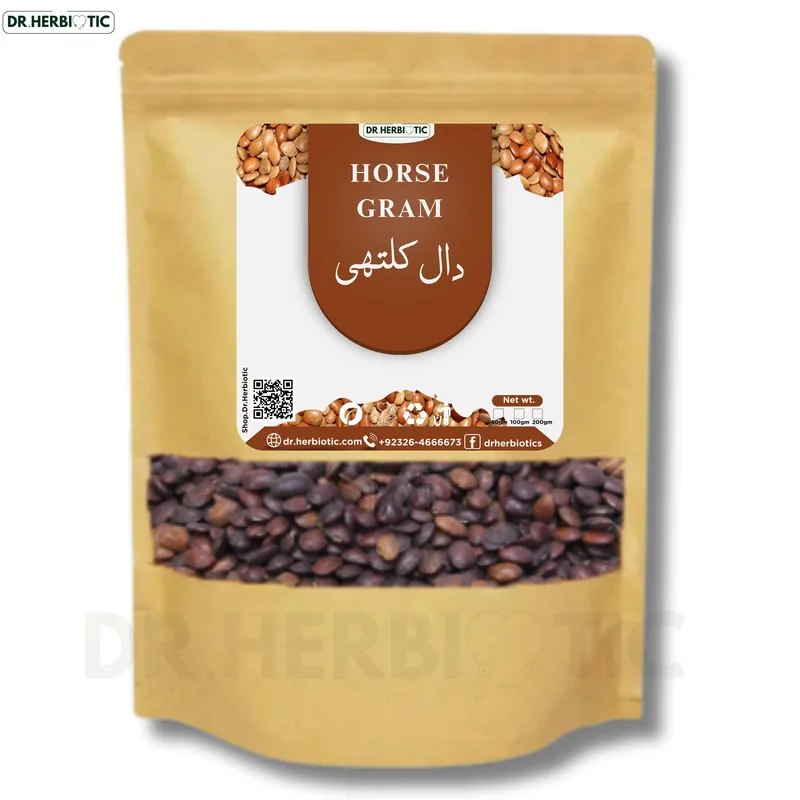
Horse Gram
Rs. 220Rs. 300-27%
In StockSKU: HOR-084
1
Product Details
- Local Names
- دال کلتھی
- English Names
- Kulthi Dal, Dalkulathi, Macrotyloma Uniflorum, دال کلتھی
- Botanical Name
- Macrotyloma uniflorum
Kulthi dal, the horse gram, is Macrotyloma uniflorum, and it is one of those pulses that the subcontinent has kept in daily use for a very long time, in a way that has very little to do with the dal of today. The plant is a low, sprawling legume that creeps along the ground and carries small, pale yellow flowers and then flat, kidney shaped pods with a papery skin, and the seed inside is small, pale green to grey, and rather hard.
The seed is the part that is used, and the old way of eating it is worth knowing about, because it is not the way it is usually eaten now. The traditional preparation soaked the horse gram overnight, then sprouted it, and ate the sprouted seed as a salad, with the sprouted shoots and all, and it was a common food in the winter and in the fast. It is also the pulse that was used in the villages during the lean months, because it grows where little else will and it is cheap and filling and it keeps.
In the traditional practice the horse gram appears in the classical combinations and in the household remedies, and it is one of those seeds that has a place in both the kitchen and the herbal drawer, in the way that fenugreek does.
There is also a long and rather good story about this plant, because the horse gram was grown as a green manure and a fodder crop, and it was brought to the western world in the nineteenth century as a forage plant for the American dust bowl, where it was planted on farms that were failing. It turned out to fix the ground so well that it was used to bring back acres that had been abandoned, and it is one of the examples that come up whenever people talk about a plant that earns its place twice over.
In the kitchen the seed needs the treatment that old cooks gave it, which is simply time. It is soaked, and often sprouted, and it is then cooked until it is soft, and the result is a nutty, earthy, whole bean with a texture nothing like the flour or the split pulse of the shop. That is why it is worth cooking properly, and why a quick soaking changes the taste completely.
Dr Herbiotic sells the whole seed, cleaned and sorted, in three sizes. Keep it sealed in a dry jar in a cool cupboard, away from the light and away from damp, because it is a legume and it will go musty if it is kept badly, and it is one of the seeds that is worth soaking before cooking.
Reviews
No reviews yet — be the first!